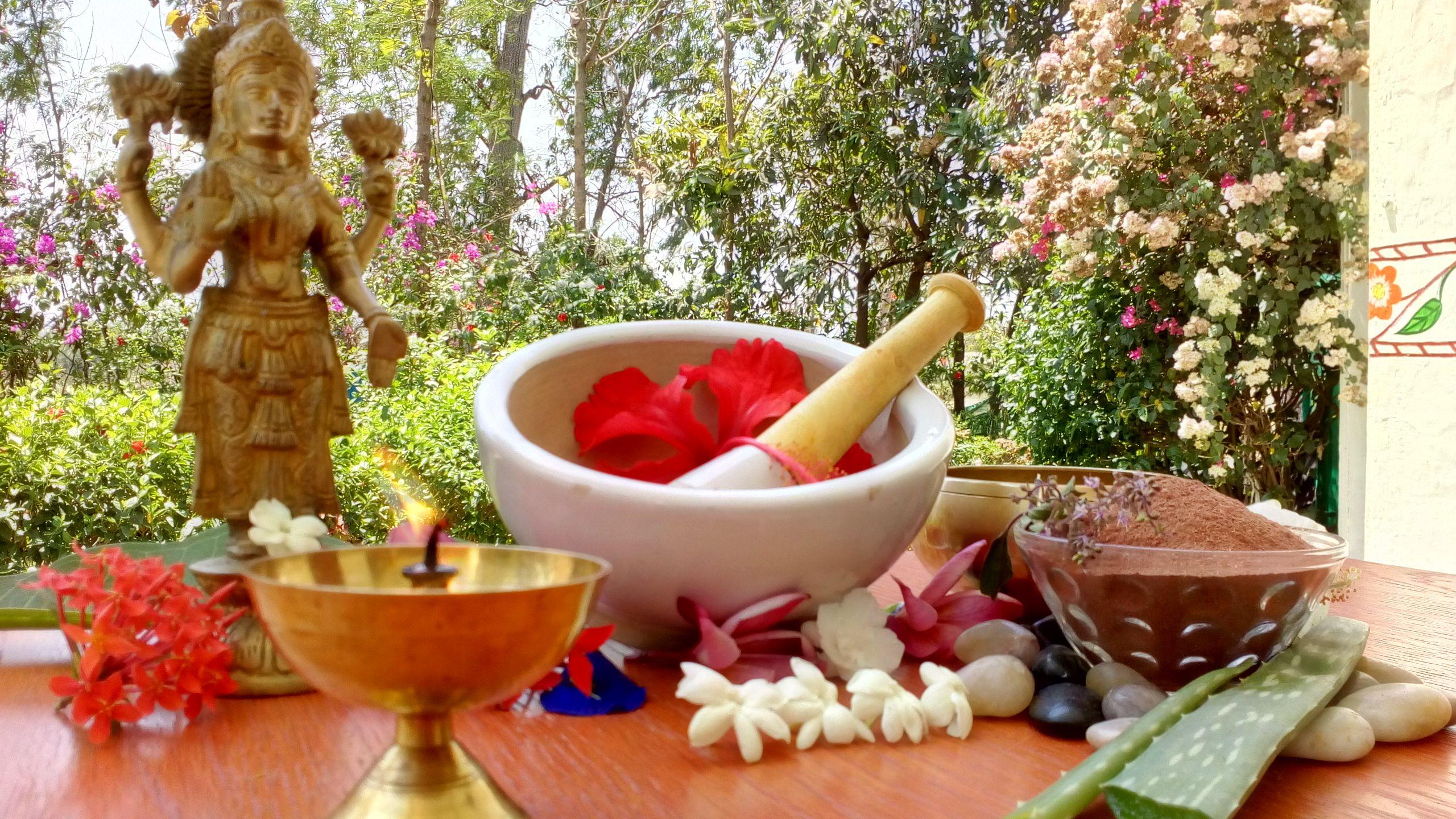
Prakriti, one's natural state of wholeness, is determined upon conception. It's based on many factors, including the parent's state of being at that time. It consists of 3 basic qualities, attributes (called Gunas) and they are:
Showing posts with label Ayurveda. Show all posts
May 30, 2023
What's Your Prakriti?
Sattva - the principle of light, harmony, balance, intelligence, and perception
Rajas - the principle of energy, being active, emotions, and chaos.
Tamas - the principle of inertia, the darkness, state of dullness, and resistance.
Our doshas dance with the Gunas and our goal is to maintain them in the Sattva (light) vibration.
The 3 basic Dosha (humours) types are Vata, Pitta, Kapha.
Our lives are ruled by these 3 and we strive to balance them and harmonize with nature. Most of us are blessed with 2 of 3 humours. Once we can deduce our original constitution, we can then begin to examine the dis-ease and how to balance. Which one sounds like you?
VATA - thin, lean, dry skin, dry hair, tend to have small eyes, low appetite, prone to constipation, very active - physically and mentally, insomnia or scant sleep, fast speech. Adjust easy to change, and may be indecisive, often worry too much and have a nervous nature. They are the wind element and the primary dosha. Like air, they are motion. Tend to be artists, creators, often daydreaming and the mind goes a mile a minute.
VATA qualities - light, quick, cold, subtle, dry, changeable, mobile
PITTA - moderate frame, moderate weight, soft or oily skin, hair is also soft and oily, sharp eyes, great appetite, easy eliminations, excessive thirst, loves competition, sleep is sound, speech is sharp and clear, tend to have freckles, they are the fire element so they are always warm, heated in all aspects. Pitta means "the power of digestion". Tend to be athletes, leaders, managers, anything business type.
PITTA qualitites - hot, oily, sharp, intense, acidic/sour; related to the color red.
KAPHA - large frame, heavy, thick oily hair, big eyes, slight thirst, elimination is slow, activity is low to lethargic, mind is calm and slow, sleep is heavy and often prolonged, and they speak slowly. They are the earth and water element, and refers to the power of cohesion. Tend to be the nurturers, the supporters, like teachers, counselors, doctors, nurses.
KAPHA qualitites - slow, heavy, static, dense, moist, wet, unctuous, oily
Want to know your dominant element in nature? Email me and let's get you started on your Ayurveda journey!
Jan 26, 2021
Asian Noodle Soup for Winter
![]() |
| Asian Noodle Soup with Leeks |
I have always loved eating Asian Cuisine. It has been a long time favorite of mine, however the spices are foreign to me. I'm at a loss when combining the delicious flavors that permeate some of the most delicious dishes I've ever consumed. As I perused Ayurveda Cooking for Beginners by Laura Plumb, I saw this recipe - Asian Noodle Soup - and I knew I was going to remake it, as I do with most recipes. This soup is warm, soothing, and flavor filled! Perfect for Fall, Winter, or when you need to feel nourished, it pacifies Vata and has all 6 tastes, which makes it a satiating meal to your taste buds. Let's not mince words, here we go.
Ingredients:
- 1 tsp of grape seed oil
- 1 tsp sesame oil, and a dash for serving
- 1 inch piece of ginger, peeled and minced
- 1 leek, washed and chopped
- 4 garlic cloves, minced or finely grated
- 4 cups of broth of choice + 2 cups of water
- 8 oz of noodles of choice
- 1 cup of fresh spinach
- 1 tbs sesame seeds
- dash of tamari or soy sauce
- chili oil (optional)
Directions:
- Cook noodles al dente, per directions. This means to under cook as they will finish in the soup
- Drain and add 1 tbsp of sesame oil to prevent from sticking
- Set aside
- In a soup pot, add the grape seed oil, sesame oil, ginger, and leeks on medium high heat.
- Allow them to sweat for 5 minutes
- Add in garlic and stir for 1 minute, and then add the broth
- Bring to a boil and add in spinach and allow to wilt a bit
- Turn off heat and remove from heat.
- Toast sesame seeds in a dry pan, high heat for 60 seconds. Remove from pan. Do not leave in hot pan.
- Add in miso to soup pot, mix
- Add in noodles
- Serve in a bowl with a dash of tamari and the toasted sesame seeds. I also added a dash of sesame oil and a dash of chili oil
Watch me taste test!!
The flavors in this are so authentic and nourishing. It was easy and quick to make, and customize-able! You could swap out your dosha pacifying foods, as is done in the cookbook. Every meal we eat can be made with Ayurvedic principles and dosha specific, it's one of the reasons I am so passionate about sharing this healing science of life and longevity. Did this entice your appetite? Tag me if you make this, would love to see and share!
Apr 18, 2020
How To Use Spices Internally and Externally - Ginger
Energetics of Ginger
Ginger is pungent and sweet in taste, it's heating to the body and has a post-digestive affect of sweet taste. It pacifies Kapha, Vata and aggravates Pitta, when consumed in excess. Ginger nourishes all the dhatus (tissues) and supports the respiratory and digestive systems. It is effective for poor circulation, coughs, colds, flu, arthritis, headaches, nausea, morning sickness, indigestion, and motion sickness, to name a few. Ginger is a stimulant (increase all organic functions by stimulating the power of digestion), diaphoretic (induces perspiration and thereby restoring circulation), expectorant (promotes the discharge of phlegm), carminative (relieves gas, pain and distention), antiemetic (helps with nausea), and analgesic (relieves pain).
Ginger may be the best and most sattvic of all the spices. Ginger is a tonic for the heart.
How to consume for best benefit?
Dry ginger is hotter and drier than fresh ginger. It is a better stimulant and expectorant for reducing Kapha and increasing Agni (digestive fire).
Fresh Ginger is a better diaphoretic, which is better for colds and coughs and excellent for Kapha overall, as it is an expectorant and stimulant.
RECIPES
Ginger Lime Mocktail
Ingredients:
Fresh Ginger
1 Lime
1 scoop of chlorophyll
A little bit of water
Seltzer water
Directions:
Finely slice ginger for a total of 10 slices. Place in bottom of glass.
Squeeze lime into glass. Gently muddle together with spoon.
Add scoop of chlorophyll and mix with lime juice and ginger. Add water to help mix.
Fill with seltzer water and add ice.
Serve immediately.
Ginger Carrot and Squash Soup
Ingredients:1 1/2 tsp coriander seeds
1/2 tsp yellow mustard seeds
2 tbsp oil
2 cups of onions
1 tbsp fresh ginger
1/2 tsp turmeric
1/2 tsp curry powder
1 lb carrots, peeled and chopped
1 acorn squash, peeled, seeded and chopped
1 tsp lime zest
6 cups of veggie broth
1/2 cup cream (regular or vegan)
1 tbsp of fresh lime juice
salt and pepper to taste
1/2 cup parsley
Directions:
*Dry roast the coriander and mustard seeds and cool. Place in grinder and grind to a fine powder.
*Add oil to frying pan, on low medium heat, and saute onions until they are golden brown.
*Add the ginger, turmeric, ground coriander and mustard seeds, and curry powder. Stir for 1 minute.
*Add carrots, acorn squash, lime zest and cover and cook for 5 minutes.
*Add the veggie stock and bring to a boil. Reduce heat, cover, and simmer for 30 minutes.
*Cool soup and then ladle into blender and blend. Return to pot and stir in cream, lime juice, salt, pepper, and parsley.
So far we've learned about Black Pepper and Turmeric in our Spice Series.
Here's my latest YouTube regarding Dhatus and Digestion.
Here's my interview with Colin Zhu from Thrive Bites. I share tips on boosting immunity and staying sane during this Pandemic.
Still offering free Dosha Quiz assessment for those who are interested in learning their dosha and beginning their path onto Ayurveda.
Jan 24, 2020
How To Use Spices Internally and Externally - Black Pepper

Black Pepper, known as Piper nigrum (Piper nigrum), is a part of the family Piperaceae. Usually dried and used as a spice known as a peppercorn, it is an excellent aid for stimulating digestion. It's qualities are Hot and Dry, pacifying Kapha and Vata. It is a powerful expectorant and mucus-cleanser when added to honey. Vipaka, post-digestive effect, is pungent, and heating. Black pepper strengthens the plasma (Rasa dhatu), blood (Rakta dhatu), fat (Meds dhatu), marrow and nerve tissues (Majja dhatu).
Black pepper is native to Kerala in Southwestern India and is extensively cultivated there and other tropical regions. Used in ancient remedies for: constipation, insect bites, tooth decay, sunburn, arthritis, lung disease, toxins in the colon, fever and more! Because black pepper is a carminative (expels gas from the body), it discourages intestinal gas from forming, in addition, the outer layer of the peppercorn aids in the breakdown of fat cells. It promotes sweating as well, which can help rid the body of ama (toxins). This common condiment comes from a lineage of royalty and was considered the King of Spices during the Middle Ages. At that time, Black Pepper was more valuable than gold. Only the wealthy could afford to keep and store. Now, it's considered a staple in most homes.
Why is Piperdine so important?
Black pepper contains essential oils like piperine, which is the source of its bold character and heat. This compound zaps your taste buds and triggers a sneeze when it hits the nerve endings inside your nose. Piperine stimulates the taste buds, activating the pancreas to start producing digestive enzymes. It tones the lining of the intestines, and speeds up the time it takes to move all the way through the digestive tract. Piperdine is is exceptional in its influence on the liver, drug-metabolizing system and improves digestion and metabolizes medications faster.
How to consume for best benefit?
A pinch or more is enough. You can put black pepper on anything, including fruit. Add pepper last, as adding in too early may leave a bit of bitterness. Store in glass, metal, or plastic. Never store in wood, as wood leaches the oil from the peppercorns, making them stale. Use in moderation as it is Pitta aggravating when used in excess.
RECIPES
Black Pepper Gravy
Ingredients
- 5 tbsp olive oil or vegan butter
- 7 tbsp all-purpose flour
- A pinch of garlic powder
- 1/2 tsp poultry seasoning, optional
- 1/8 tsp nutmeg
- 4 cups cashew milk, at room temperature
- 2-3 tsp Fresh cracked pepper (or more)
- Salt, to taste
- In a medium sized pot heat oil over medium-high heat, add flour and stir for 2 – 3 minutes, until it turns light golden brown
- Add the garlic powder, poultry seasoning and nutmeg, mix well, stir for a minute or so. Mixture will form a ball of sorts
- Slowly add the milk and continue to stir
- Bring just to a boil, reduce heat to medium and continue to cook, stirring constantly, until gravy has thickened to desired consistency, about 10 minutes.
- Gravy will thicken a bit more as it cools. Season with plenty of pepper and salt to taste. Set aside with lid on, or slightly askew stirring every now and then until ready to serve. If gravy cools too much, heat over low until warmed
Black Pepper Tea
Ingredients
- 2 cups filtered water
- 1 Ginger tea bag or 1 tsp chopped fresh ginger
- 1 tsp. freshly ground Black Pepper
- 1 Tbsp. honey
- 1 tsp. lemon/lime juice
- 1/8tsp Turmeric (optional)
Directions
- Bring the water to a boil.
- Turn off heat.
- Add all other ingredients
- Steep for three to five minutes
- Strain and drink while hot
Jan 10, 2020
How To Use Spices Internally and Externally - Turmeric
Turmeric is a staple across kitchens in India and is a rhizome, or underground stem. It is one of nature's most powerful healers, and owes its preventative and curative nature to its active ingredient: curcumin. Curcumin is a compound rich in anti-oxidants and anti-inflammatory actions that have been proven to improve and protect every organ in the body. Curcumin has been shown to combat more than 70 ailments, including heart disease, cancer, and type 2 diabetes, poor circulation, skin disorders and more.
Turmeric is a natural antibiotic, strengthens digestion, and improves intestinal flora (gut health). It also purifies the blood and stimulates formation of new blood tissue. It reduces Kapha Dosha but can increase Pitta and Vata when consumed in excess. Turmeric is energetically bitter, astringent, pungent and heating and works on all the 7 tissues (dhatus), which effectively cleanses the Chakras, purifying the channels of the subtle body.
Why is the fact that Turmeric is an anti-oxidant with powerful anti-inflammatory abilities so important??
Oxidation is a kind of internal "rust" caused by reactive oxygen species (ROS) - which are molecules that are missing an electron from their outer ring and so they steal an electron from other molecules, creating oxidative damage or oxidative stress. These little thieves! The oxidative stress leads to chronic low-grade inflammation, which may trigger or advance many dis-eases.
The East has used this spice for over 2,000 years. Natural Medicine uses for Turmeric include:
- antacid to soothe digestive problems
- topical paste for skin problems
- analgesic to relieve headache (curcumin is the active ingredient in Tylenol!)
- decongestant to clear nasal passages
- speed wound healing and prevent infections
How to consume for best benefit?
A teaspoon a day, spread throughout all meals is suggested. Turmeric is a key ingredient in Curry, however they are not the same. Turmeric is what gives Curry its bold yellow color, which used to be incorrectly called the "poor man's saffron" due to Marco Polo mistakenly identifying this powerful, healing spice. Adding Black Pepper with Turmeric has shown to improve absorption, when consumed together.
Turmeric and Black Pepper?
"Curcumin only makes up about 5% of turmeric, similar to black pepper where the active ingredient, piperine also makes up about 5% of the spice. Piperine is responsible for black pepper’s rich flavor and helps inhibit drug metabolism. For example, the liver gets rid of foreign substances by making them water-soluble so that they can be excreted, and piperine can inhibit this process so that curcumin is not excreted. This explains how piperine can help to make curcumin more bioavailable. With just 1/20 teaspoon or more of black pepper, the bio-availability of turmeric is greatly improved, and turmeric’s benefits are further enhanced.
Another way to increase the bio-availability of turmeric is to consume this spice with a source of fat (such as avocado, nut butters and nuts, fish, etc.), and therefore curcumin will directly be absorbed into the blood stream and bypass the liver."
Recipes
Tri-doshic Vegetable Soup
Ingredients
- 4 cups mixed vegetables according to what’s in season
- 8 cups of water
- 1 tsp cumin seeds
- 6 black peppercorns
- 1 cinnamon stick
- 10 cloves
- 10 cardamom pods
- 2 tbsp ghee
- 1/2 tsp turmeric
- a pinch of salt
Directions
- Cut vegetables into bite sized pieces and cover with water.
- Cook on medium heat until tender.
- Grind cumin seeds, peppercorns, cinnamon stick, cardamom pods and cloves in pestle and mortar or blender.
- Add ghee to large saucepan and then ground spices.
- Sautee for a moment but be very careful not to burn them. Remove from heat once they become fragrant.
- Add the vegetables and 4 cups of the water they were cooked in.
- Boil for 2 minutes, reduce to a simmer and cook for 15 minutes,
- Add salt and serve. Serve with toast.
Face Mask
Ingredients
1/2 cup besan (garbanzo bean flour)
1 1/2 tsp turmeric
odorless oil (coconut or sesame)
water
Directions
Mix the flour and turmeric in a container with a lid.
To Make Mask
Mix 1 tablespoon of the mixture with 5 drops of oil. Add enough water to make a paste with a consistency like cake batter.
Application
Using your fingertips, spread mixture on your face and neck, staying away from the eyes. Remember this stains, so use old t-shirts and towel. Leave on for 15 minutes and rinse off. Pat face dry with clean towel.
After learning about this healing spice, will you be giving it a try? Would you like to learn more? All year long I'll be sharing about spices, herbs and how to use them for healing internally and externally. Coming up next is Black Pepper! Stay tuned!
Oct 23, 2019
How To Establish an Ayurvedic Daily Routine
![]() |
| Property of Healthy Ayurveda |
Once a daily routine is put into practice, it is easier to re-establish a connection to the rhythms of nature. Studies have shown that humans have lost the ability to tune into the rhythms of nature. Knowing this, we must be pro-active in balancing and connecting with nature. Dinacharya allows us to reconnect easily and with purpose, and this offers a sense of safety for easier growth and expansion. In addition to a daily routine there is also a seasonal routine, Ritucharya, which we'll discuss later on in the season.
According to Ayurveda, this is how a daily routine should look:
MORNING
- Wake up in the morning before 6:00 a.m.
- Drink warm water with lemon or lime.
- Empty bladder and bowels.
- Wash your face.
- Eye rinse.
- Scrape your tongue, oil pull, brush your teeth, and rinse your mouth.
- Neti - rinse the nasal passages.
- Nasya - oil the nasal passages.
- Dry brush the body.
- Perform abhyanga (warm Ayurvedic oil self-massage).
- Perform Salutation to the Sun asana sequence.
- Practice deep breathing or Pranayama.
- Practice meditation for twenty minutes.
- Bathe or shower. Use warm rather than hot water.
- Have breakfast.
- Take herbal food supplements.
- School or work.
MIDDAY
- Biggest meal consumed at noon time
- Lay down for 15 minutes, on left side, to aid digestion.
- Light walk after meal
EVENING
- Dinner
- Walk
- Self-Care (yoga, breath exercises, and meditation)
- Self-Reflection (reflect on the day and your actions, how did we achieve being our most loving self, how can we improve?)
- Go to bed by 10pm.
Long list, right??!! Well you don't have to incorporate all of them at once, rather, pick one and start there. One will lead to two, and so on. You can pick which practices benefit you, and those which don't.
I also have an Excel Spreadsheet for those interested. Email me and I'll send it over to your inbox asap.
I'm also hosting a seasonal kichari cleanse over on Facebook starting next Monday - join us - it's FREE!!!!!!
If you're feeling the need to chat, process, digest, or vent - schedule a chat with me - it's free! I wanna chat with you - Schedule your time here!
Namaste
Mar 22, 2018
What is Ayurveda?
Ayurveda, which is Sanskrit, translates to the Science of Life. It is a healing science focusing on mind, body, and spirit. Your diet is considered one of the important therapeutic tools. By bringing harmony and balance to your diet and lifestyle you then begin to practice the preventative aspect of Ayurveda. Imagine, you have to power to heal yourself based on the foods you chose to consume.
The uniqueness in this healing science is the attention to the individual and their symptoms, causes. Everything is looked at from diet, to lifestyle. It encompasses various therapies including yoga, meditation, astrology and working with gemstones, however food and cooking play a prominent role. Food is considered to affect not only our body, but also our mind. By understanding how to prepare foods best suited for our bodies and minds, we can achieve a harmony, a balance and begin to thrive in divinity.
My intention is to bring you more information about this science. Expand your awareness about food, and being in tune with nature, because Ayurveda focuses on being a partner with nature, and the elements.
Ayurveda speaks of a universal life force which manifests as three energies, or Doshas; they are Vata, Pitta, and Kapha. We're all made of a unique combination of these 3 Doshas. Most people have an abundance in one or two doshas. This combination is determined when one is conceived, and is your authentic nature. These three doshas vary based on your diet, season, environment, age, and several other factors.
The first step is figuring out your body type.
-------- EMAIL ME -------------
Subscribe to:
Posts (Atom)


